Respect for differences in society will only be achieved through the reflection and individual action of each of its members. With this lesson, Cláudio Mascarenhas Brandão, minister of the Superior Labor Court (TST), concluded the second and final day of the 2024 Reatech Congress.
“Ableism begins in our internal struggle, in every second of our lives,” stated the minister. “The society that excludes does so in the most common acts of our daily lives,” he added, calling on the public to respect differences beyond the event.
Brandão also emphasized the importance of the actions of managers, whether in the corporate world or in the public sector, in advocating for inclusion. And, recalling that “up close, no one is normal,” he defended “a difference that includes, not one that excludes.”.
The minister was the last speaker on the panel “The Future of Rights and Access to Public Policies,” which featured the participation of Renato Pacheco Neto, Consul of Sweden, mayors and municipal secretaries, and representatives of regional labor courts.
In the first part of the session, which discussed the theme “Access to Public Policies,” one of the highlights was the mayor of Campina do Monte Alegre (SP), Tiago do Zé Dito, the only mayor in Brazil with cerebral palsy. “Today we live in a society that is a hostage to the senses,” the mayor stated. “Our nation will only truly be inclusive when it has more people with disabilities in politics.”
In a second moment, the speakers discussed “The Future of Rights.” Ricardo Tadeu Marques da Fonseca, appellate judge of the TRT - 9 and Brazil's first blind judge, drew a parallel between the past and the present to show the evolution of standards in the segment, making it clear that there is still a long way to go. “It is a cause that requires militancy, in the democratic sense, respecting the institutions,” he said.
Also speaking on the panel were three representatives from Santa Cruz do Rio Pardo: Diego Henrique Singulani Costa, mayor; Roberta Maitan Zilio, manager of Rights for Persons with Disabilities; and Vinícius Mendonça Vieira, Director of Programs and Projects for the Secretariat for the Rights of Persons with Disabilities.
Also participating in the event were Alexandre Camargo Brandt, Municipal Health Secretary of Paulínia, and Samuel Hugo de Lima, president of TRT-15. The mediator was Carlos Alberto Crispim.
Women's volleyball team plays with the crowd in the multi-sport gym
Not just anyone gets the opportunity to be alongside high-performance athletes. Much less play with their idols. At Reatech, however, that was possible: athletes from the Brazilian women's youth paralympic sitting volleyball team played with the general public on the multi-sport court, on the third day of the event, which runs until Saturday (23), at the São Paulo Expo.
Marciana Seiler Piske, 40, a youth national team player, says that playing in front of an audience is a way to show that “nothing is hard for us, you just really have to want it.” The athlete has been training for four years, three times a week, two hours a day (in addition to activities like weight training and physical therapy).
“I carry with me the phrase that my disability does not define me,” states player Ana Jenifer dos Santos Silva, 20. “Many people with disabilities may think they are incapable and even exclude themselves from society, but we try to show, with our examples on the court, that there are no limits for us.”
Angelo Alves Neto, president of the CBVD (Brazilian Volleyball Confederation for the Disabled), says that it is the first time the organization has participated in the congress, at the invitation of the Brazilian Paralympic Committee. “It was a fantastic idea to bring those who make Paralympic sports happen, those who seek improvement through sport,” says Alves Neto.
Siblings Paulo and Mariana Cruz, 16 and 19 years old, both students, were on the court playing with the athletes. “It's not easy, no,” stated the teenager, sitting on the floor, as he tried to lift the ball for his sister, who has a leg disability. “I loved it. The players are very friendly and, when I finish my studies, I want to start practicing,” said the young woman.
Different ‘Little Farm’ pets catch the public's attention at Reatech
The penultimate day of the 19th edition of Reatech + Expo Brasil Paralímpico brought a highlight to the use of animals in assisted treatments, including exotic species, with an innovative approach to promote emotional, physical, and social health. The program included the “Pet Course | Animal-Assisted Therapy,” which combined theoretical and practical activities, in addition to the interactive “Little Farm” space, where visitors could connect directly with the animals.
Yasmin Lima, 19, a parabadminton athlete with myelomeningocele who had to amputate one of her legs due to an infection, shared her experience at Fazendinha. “It was really cool! The cockatiel caught my attention the most, but I liked playing with the dogs too,” she said. She highlighted the importance of animals in her life, especially in coping with anxiety crises. “They understand, they help a lot. I used to have a little bulldog, but I had to give it away. Still, I see him with my neighbor, and that brings me joy.”
For Etevaldo Santos, 42, visually impaired and president of the Maranhão Institute for the Visually Impaired (IMDV), the emotional connection provided by the animals was one of the highlights. “The birds and even the cockroach caught my attention. At my house, we love animals; we have dogs, cats, and a parrot. They make our day happier. When I travel, the first thing I think about when I get back is hugging my female dogs, who wait for me in the bedroom.”
For Amanda Rodrigues, an 18-year-old volunteer and occupational therapy student, participating in the event was transformative. “At first, I had difficulties, such as not knowing sign language, but now I can communicate with and assist people with various types of disabilities. This experience was very enriching and made me believe in a world accessible to everyone.”
Reatech + Expo Brasil Paralímpico continues to provide discussions and experiences on inclusion, accessibility, and well-being with the support of initiatives that connect people and animals.
Reptile therapy proves effective for different types of treatment
The PET Course, held during Reatech 2024, highlighted reptilotherapy as its main theme, an approach presented by Andrea Ribeiro, a speech-language pathologist, equine therapist, and coordinator of Walking Equoterapia. The methodology, which uses reptiles in animal-assisted treatment, has shown surprising results in the emotional, motor, and cognitive development of children and adults.
With experience since 1999 leading Walking Equoterapia, Andrea explained that reptile therapy emerged as a natural evolution of hippotherapy and therapy assisted by other animals, such as dogs, birds, and rodents. “Initially, the yellow-footed tortoise was the reptile used, drawing attention for its effectiveness with hyperactive or attention-deficit children. It wasn't one or another patient responding positively, it was all of them,” she highlighted.
Today, the methodology involves reptiles such as lizards, iguanas, snakes, and even broad-snouted caimans, all duly registered by IBAMA and treated with extreme care. Andrea highlighted the differential of these animals: “They provide a completely distinct tactile proprioception from furry ones. Furthermore, they are less invasive and have great calming power.”
Reptile therapy also promotes paradigm shifts and works on issues such as bullying. “By interacting with a boa constrictor, for example, we overcome prejudices and teach not to judge beings or situations by their appearance or stigmas,” the professional explained. In addition to social and emotional benefits, the absence of hair in reptiles makes them allies for people with respiratory allergies, such as rhinitis and sinusitis.
Under the supervision of educators, biologists, and veterinarians, the work is carried out in partnership with the company SOS Ambiental, reinforcing the commitment to social and environmental responsibility. “Reptile therapy continues to show that reptiles, often misunderstood, have a unique role in promoting human health and well-being,” the speaker added.
Mobility in focus in the development of assistive technologies
Among the brands that caught visitors' attention at Reatech + Expo Brasil Paralímpico is Movingjet. The company exhibited its ATTO Mobility Scooter – foldable equipment that transforms into a suitcase, besides being safe and recommended for those with mobility issues – and the world's lightest Rollator at just 4.8 kg, featuring a carbon fiber frame, folds with a gentle lift on the seat for easy transport and storage, forward-facing ergonomic handles that promote good posture and integrated brakes, and easy height adjustment via a push button
“We are a company that distributes innovative products. We decided to participate in the event because of the target audience profile we want to reach with our products. Reatech is meeting our expectations, with a more selective audience, so we can find the end user more easily, reports marketing director Adan Fraga.
Another company with mobility solutions, now for the home, is Lift AID, which came in partnership with MRE Reab, and presents its body suspension system. “Our technology provides a body suspension workout that can revolutionize the practice of physical therapy, offering countless benefits to patients, such as improved bone density, muscle strength, gait symmetry, functionality, among others. Our equipment was designed to optimize space, preventing accidents and ensuring a safe environment for both the patient and the caregiver,” says Ana Navarro, partner at Lift AID.
Occupational health principles ensure the full inclusion of people with disabilities in the workplace
The inclusion of people with disabilities in the job market goes far beyond hiring. To ensure the full performance of these professionals within organizations, it is essential that health and safety regulations are applied in a personalized way, meeting the specific needs of each type of disability and each position.
At the 19th Reatech + Expo Brasil Paralímpico, one of the exhibitors that brought this topic to the forefront was Zuki, a company specializing in Occupational Health and Safety (OHS) consulting. Participating in the fair for the first time, the company highlighted the importance of analyzing and producing ergonomic reports adapted to different disabilities, in addition to the need to ensure that equipment such as Personal Protective Equipment (PPE) is suited to each employee's conditions.
For Igor Ortega, relationship manager at Zuki, companies seeking to be truly inclusive must pay special attention to the creation of an accessible and functional work environment that promotes well-being and productivity while preventing health issues. “It is not enough to simply meet the hiring quota; you need to adapt the workspace and ensure that this environment is accessible,” he pointed out.
OH&S work for people with disabilities ranges from the adaptation of desks and chairs to ambient lighting. All actions must be guided by the Regulatory Standards (NRs) of the CLT, with emphasis on NR 1, which deals with risk management, and NR 5, which addresses the Internal Commission for the Prevention of Accidents and Harassment—better known as ‘CIPA’. “We guide HR departments based on the NRs. NR 5, for example, can be related to PWDs, mainly through the aspect of accident prevention,” Ortega explained. “Companies are required to have a constituted CIPA, and it is very important that PWDs are included in the Commission's activities.”.
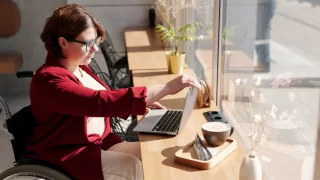
Amid the ever-growing trend of working from home, a new challenge arises for companies: ensuring that the home workstation also complies with ergonomic standards. “Ergonomics is the employer's responsibility, regardless of the employee's workplace,” Ortega recalled.
Learn what it takes to start a business in the physical therapy and occupational therapy sector
One of the topics debated at Tecfisio – TO (Advanced Technologies Seminar in Physical Therapy and Occupational Therapy), during Reatech + Expo Brasil Paralímpico, was about entrepreneurship in the pediatric rehabilitation segment with physical therapist Bárbara Soares and occupational therapist Vanessa Madaschi.
Soares is the creator of Centro Intensiva, a benchmark in neurorehabilitation for level 4 and 5 children and adolescents, while Madaschi is a partner at the company Playbille – Human Development.
“To entrepreneur in the healthcare field, it is necessary to maintain consistency in your daily activities. Before thinking about innovation, doing the basics well is what will guarantee your consolidation in the market as a professional and as a businesswoman before potential partners and suppliers. Coupled with this, patient engagement must be done through active listening, empathy, and self-criticism to meet people's needs, emphasizes Madaschi.
Corroborating this thought, Soares emphasizes that “the success of rehabilitation lies in the gaze of the other and the patient's family. If the person and their peers are happy, then their work is or has been successful.”
For those wishing to start a business, the duo listed 12 indispensable skills/characteristics subdivided into three categories: administrative, interpersonal, and marketing/sales. In the administrative part, it is necessary to have technical knowledge of your area, entrepreneurial vision, management skills, and the capacity for innovation. Regarding the interpersonal aspect, have ethics and responsibility, resilience and persistence, know your main social-emotional skills, and always be result-oriented. To close, regarding the marketing and sale of your business, keep in mind that you need to know how to sell yourself beyond creating innovative solutions, seek networking and collaboration, and stimulate your creativity to generate innovation.
“An ethical and serious stance generates trust and credibility in the eyes of the market and patients, even in the event of failure in your endeavor, says Madaschi.
“We can transform people through our hands and our work. Therefore, hone your strengths and work on your weaknesses before taking care of others, Soares concludes.
Corporate inclusion and accessibility take center stage at the Reatech Congress
The second day of the Reatech Congress, part of the content activities of the International Inclusion, Accessibility, and Rehabilitation Fair, featured a lecture by Simone Coutinho, Diversity and Inclusion leader at Santander. During Talks Reatech, Simone addressed the topic “Accessibility and Corporate Education: Reconfiguring Organizational Culture for ESG Success.”.
Simone highlighted that accessibility is an essential pillar for building an inclusive corporate environment aligned with ESG objectives, allowing all employees to have equal opportunities and contribute to the organization's success. “Santander has implemented several actions to make corporate education accessible and inclusive, such as reviewing training courses with subtitles, alternative texts, and other assistive technology resources. In addition, we constantly promote lectures to raise awareness about accessibility and inclusion,” she stated.
Among the company's initiatives, projects aimed at attracting and developing professionals with disabilities stand out, such as the “Do Seu Jeito” program, which offers multidisciplinary support to people with disabilities, and “Habilidade não tem limite,” focused on selection and training for work in the commercial area.
The executive also emphasized that diversity provides different perspectives and skills in the workplace, while accessibility ensures that these contributions are viable. “This results in innovation and adaptation to the needs of customers and society. Despite the challenges of ableism and resource limitations, Santander relies on training, partnerships, and internal programs to overcome these barriers,” she concluded.
Santander is hiring people with disabilities at Reatech
Santander Group is participating in Reatech for the second time and, in this 19th edition, brought 40 job openings intended for people with disabilities across its three companies: Santander bank, First, a technology company, and Tools, which operates in operations and customer service. Over the first three days of the event, interviews took place and six people have already been advanced to the final selection stage.
According to the company, most of the job openings are for retail, the commercial area for customer service in stores, but there are also opportunities for the technology sector. Santander expects that candidates in the final stage, if approved, will start working in December.
Service:
Reatech Brasil + Expo Brasil Paralímpico 2024
International Exhibition on Inclusion, Accessibility and Rehabilitation
Dates: November 20 to 23
Hours: 10 AM to 7 PM
Location: São Paulo Expo
Address: Rodovia dos Imigrantes, 1.5 km – Vila Água Funda, São Paulo – SP
More information in this link.
Photos from the 2024 edition Access here
About Fiera Milano Brasil
Fiera Milano Brasil it is Brazilian subsidiary of Fiera Milano, one of the world's largest trade fair and congress players, which each year attracts approximately 30,000 exhibitors and more than five million visitors. In Brazil, there are ten fairs that represent the most diverse segments of the economy, such as security, clean and renewable energies, pipes and fittings, cables, occupational health, rehabilitation technologies, inclusion and accessibility, among others. Among the main brands in the portfolio are Exposec, FISP, Fire Show, Ecoenergy Congress, Tubotech, wire Brasil, Fruit Attraction São Paulo, in partnership with IFEMA Madrid, Reatech + Expo Brasil Paralímpico, in partnership with the Brazilian Paralympic Committee (CPB), Esquadria Show, in partnership with NürnbergMesse Brasil, TranspoQuip, and ExpoParking in partnership with BMComm. More information: www.fieramilanobrasil.com.br
Press Information:
2PRÓ Comunicação – Fiera Milano Brasil
Myrian Vallone | Teresa Silva – 11-99228-7836
e-mail: fieramilano@2pro.com.br
(11) 3030-9463 | 9404