Despite the changing landscape, access to assistive technologies, lack of support, and lack of visibility are still obstacles to equality
From Athens in 2004 to the most recent Games in Tokyo in 2021, the number of female athletes in the Brazilian delegation increased by 400%, from 23 to 95. The highest number of female participants we’ve ever had was at the 2016 Games in Rio de Janeiro, with 102 athletes. At the last count, they accounted for 40% of Brazil’s Paralympic athletes—the highest percentage to date.
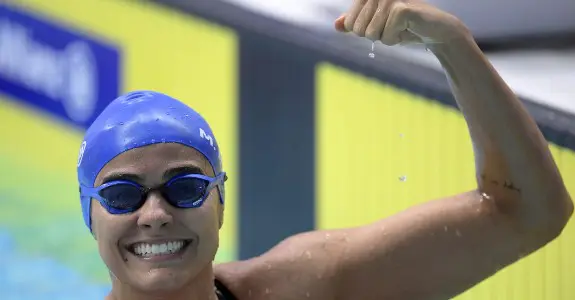
Competing at a high level and bringing medals to the country are part of the routine of Sabrina Custódia, from cycling, and Mariana Gesteira, from swimming. As parathletes who represent Brazil in international competitions, the two are part of a growing group, though it is still smaller than the male one. Even so, both recognize the increase in representation.
Mariana and Sabrina train daily to be part of the select group of competitors for the Paris 2024 Paralympic Games, which take place between the end of August and the beginning of September this year. Brazil has increased the number of women with each edition of the sporting event. In 1972, in the country's first participation in the competitions, not a single female athlete took part.
Mariana Gesteira was born with Arnold-Chiari syndrome, a central nervous system malformation that affects coordination and balance. Because of this, she uses a wheelchair and a scooter to get to her training venue. The swimmer started in the sport at a very young age, at 3 years old. Her mother enrolled her in swimming so that she would learn how to swim and not be in danger of drowning, but what started as a necessity turned into a passion. Until, at age 14, her syndrome began to manifest, leading her to have fainting spells.
“I already had the dream of being an Olympic athlete, but when I discovered the illness at age 14, all of that changed,” Mariana says. “Living this dream today, of being a Paralympic athlete, is the fulfillment of that little girl's dream.” The swimmer is a Paralympic bronze medalist and world champion in the sport.
Mariana Gesteira, Paralympic swimming athlete (Credit: Douglas Magno – CPB)
“I have a rare disease. There is no high-performance athlete who does what I do with my condition. We are always figuring out the best way to deal with it. There is no recipe for success, unlike for the vast majority of Olympic athletes. So, I am constantly reinventing myself in search of my best version. That is my biggest challenge,” reflects Mariana.
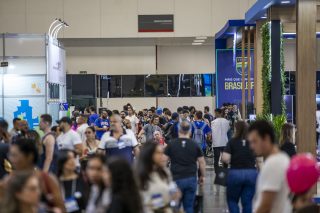
Sabrina Custódia's story is different. At 18, while climbing onto the roof to adjust the television antenna, the young woman suffered an electric shock from a high-tension wire. After three months of hospitalization, both her hands, her right foot, and the toes of her left foot were amputated. Sabrina had always liked sports, but it was in 2012 that she glimpsed the possibility of becoming an athlete. By visiting the Reatech fair, an event in the inclusion, accessibility, and rehabilitation sector, she came into contact with different accessible sports and with other athletes.
“After I became physically disabled, I saw that it was also possible to become an athlete. Right there, I realized there were suitable prosthetics for me, so I could run and walk better,” Sabrina recalls. “I had the opportunity to try out a few sports. When I got a running prosthetic from Ottobock and started running, it sparked a desire in me to be a Paralympic athlete.”
Regarding the challenges of being a Paralympic athlete, Sabrina highlights the difficulty of getting support and media coverage. “In my sport, cycling, I need a prosthesis to be able to ride. I see many amputee people who need this support and proper equipment for the bicycles, which are very expensive. In addition, we also need more visibility to be able to promote, encourage, and show that it is possible,” she reinforces.
Female Representation
For Mariana, evolution has happened, but women's journey for equality continues. “I feel that we have more and more space, that we are growing and showing ourselves to be stronger, more present, breaking records and winning medals. We have fought for this, but we still need to be seen in the same way, as equals. It's a process, a construction. I believe we are moving toward that and that the new generations are seeking this place,” states the swimmer.
Sabrina believes that the work of the Brazilian Paralympic Committee in encouraging the participation of female athletes has helped in this growth. Even so, she emphasizes that the competitors“ unity in bringing greater representation is essential. ”We also take on this responsibility and call more girls. Because that's what we want: to see more women involved in sport. For a person with a disability to participate in sport is good for self-esteem, for our health," she points out.
Sabrina Custódio, Paralympic cycling athlete (Photo: Disclosure)
Maria Laura Pucciarelli, Physical Therapy Coordinator for Ottobock in Latin America—a company that develops and conducts research on assistive technology products—highlights the importance of women’s participation in competition results. “At the 2023 Parapan American Games, held in Santiago, the Brazilian delegation included 134 women, accounting for 41% of the team, and Brazil set a record for medals, with a total of 343 podium finishes, 150 of which were won by women,” she celebrates.
Technology for inclusion
In the same way that the joint work of women and institutions is essential for increasing female representation, access to assistive technologies for people with disabilities also enables them to pursue greater equality.
“Assistive technology has provided tools to ensure female representation in all sports. Through prosthetics, orthotics, and wheelchairs, which offer stability, movement speed, safety, and comfort with accessories designed for women, we see more and more female athletes gaining ground in sports,” says Maria Laura.
“Certainly, technology enables women to be more present in the world and in professional life, as is the case in sports. Being heard and received in the same way is a different issue. It still needs more, open-minded people, but the fact of having more space certainly helps with positioning,” Mariana adds.
Ottobock's leadership also emphasizes the importance of creating personalized products for women, taking into account key issues in female anatomy and life stages. “Currently, the devices offer accessories specifically designed for women, such as wheelchair belts with patterns and chest comfort supports, and prosthetic sockets with adjustable features for situations such as pregnancy, for example,” explains [the representative].
Therefore, part of the companies' role in the sector is to develop studies and research to understand female specificities, in order to promote greater efficiency and performance for sports modalities. In addition, the physiotherapy coordinator also highlights the need to discuss the cost and access of these technologies for women, especially in sports.
“Another role of companies is to work on empowerment through education, spreading knowledge at events aimed at women, and bringing female figures from Paralympic sports to these discussions to inspire girls and women to get involved in this world, highlights Maria Laura.