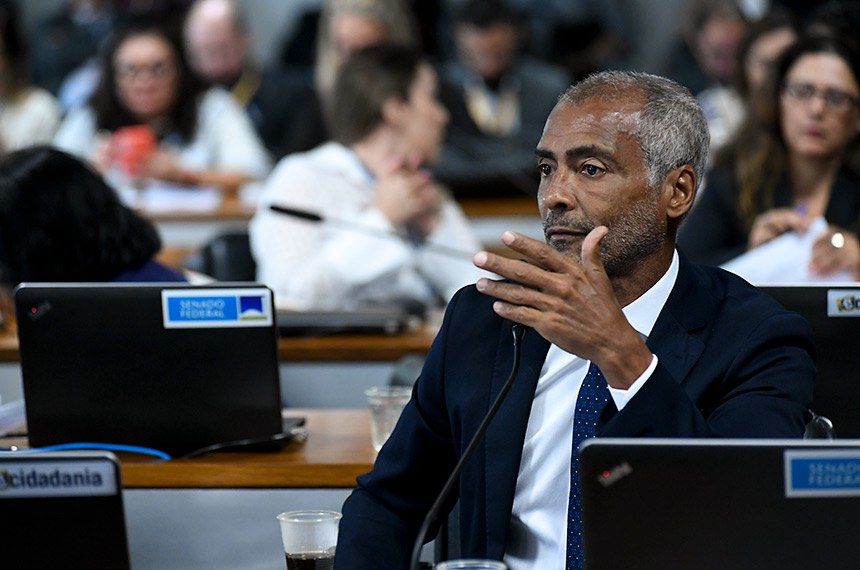
It was approved this Wednesday (15) by the Human Rights Commission (CDH) the Bill 3,277/2021, by Senator Romário (PL-RJ), which expands accessibility in jury trial sessions and trial documents for people with hearing and visual impairments. The bill goes to the Constitution and Justice Committee (CCJ).
The text amends the Statute of the Person with a Disability (Law No. 13,146 of 2015), the Civil Code (Law No. 10,406 of 2002) and the Law of Special Courts (Law No. 9,099 of 1995) to foresee the permanent presence of a professional Brazilian Sign Language (Libras) interpreter in jury trial sessions. In addition, it determines that case files, hearing dockets, and trial reviews must be available in Braille, upon request.
The project also ensures that the testator (the person who makes the will) will be able to become aware of the content written by the notary public through Libras interpretation or braille transcription. Another innovation in the text is the provision that deaf or blind people may be parties in civil and criminal special courts proceedings, with Libras interpretation or braille, when necessary.
The proposal received a favorable report from the rapporteur, Senator Eduardo Girão (Novo-CE), with amendments that also guarantee people with deafblindness access to tactile Brazilian Sign Language, audio description, and real-time captioning.
— Deafblind individuals total 40,000 Brazilian men and women, according to an estimate by the National Federation of Education and Integration of the Deaf (Feneis). In conversations with civil society, we were alerted to the fact that nowadays, there are accessibility technologies for deafblind individuals that surpass the limitations of Brazilian Sign Language and Braille — the senator explained.
Citizenship
The text with the amendments guarantees assistance, hearing, and the monitoring of testimonies through simultaneous interpretation into Libras or real-time captioning, according to the best interest of the deaf person; and through simultaneous interpretation into tactile Brazilian Sign Language or other forms of communication, according to the best interest of the deaf-blind person.
For blind people or people with low vision, the text guarantees, upon request, the use of audio description or the transcription of procedural documents into Braille, as well as the presentation of documents in Braille or with audio description, provided they are accompanied by a written transcription.
Source: Senate Agency