Smartwatches have stood out in health monitoring. But these devices can do much more than that
How many times have we been curious to know the distance we walk during a day, or how many flights of stairs we climb at work, and how much time we spend being active or resting?
This information, besides satisfying our curiosity, is very important for monitoring our health.
Concerns about monitoring these habits have existed for a long time and have intensified during the pandemic. Current projections estimate an annual growth rate of approximately 8.26% through 2027.
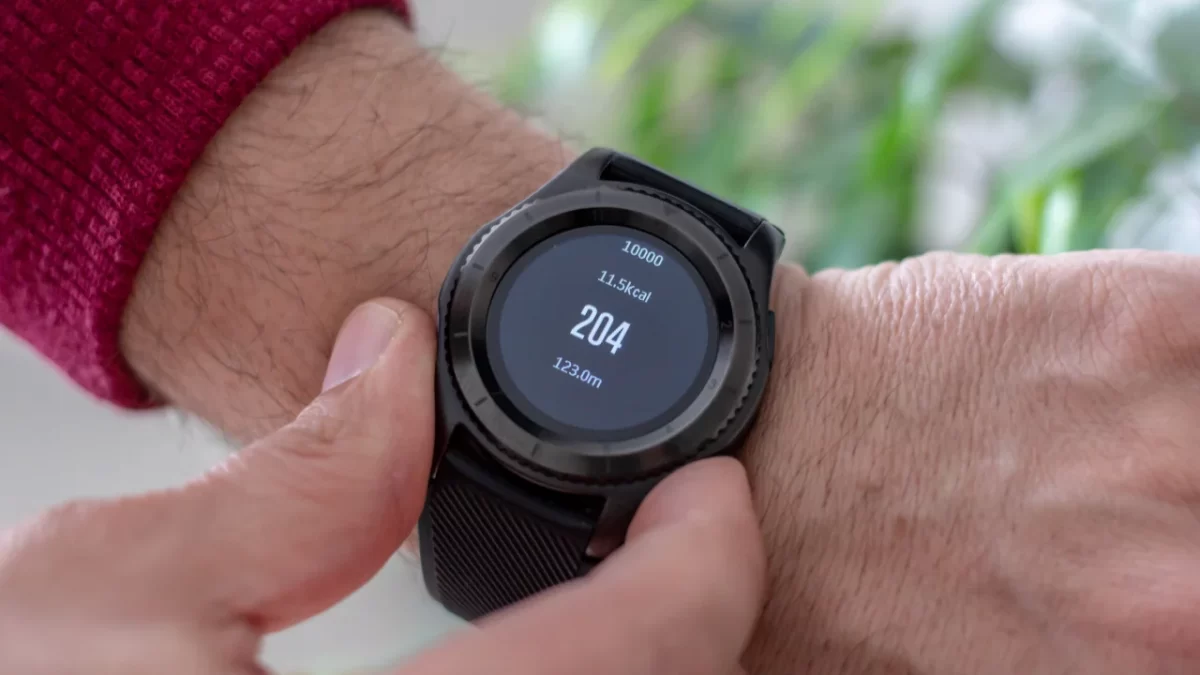
Smartwatches have been becoming protagonists in this type of monitoring due to their non-invasive characteristics and for presenting functionalities that allow them to automatically identify the physical activities performed by users throughout the day.
This is possible from information collected by the various sensors present in these devices, such as motion and heart rate sensors, which provide data for machine learning models. Thus, they manage to identify and classify everyday activities.
A practical example is the recognition of idle time and also of activities such as running and walking, even considering metrics such as speed, cadence, distance, and elapsed time.
All this data can be very useful in monitoring the user's health and performance, helping in the decision-making of a doctor or trainer, for example.
The simplicity and efficiency of smartwatches in performing various monitoring tasks boosted sales of this type of device, with a projected compound annual growth rate (CAGR) of 9.5% between 2023 and 2030, in a market that could reach approximately 70 million dollars.
With the resounding success of this market, more and more companies and developers are turning their attention to new applications. For example: using specific gestures to control other devices and trigger features on the watch itself.
Currently, this form of interaction is still in its infancy, mostly using fixed and simpler gestures, such as waving the user's hand or arm to perform a specific task.
However, in the not-too-distant future, artificial intelligence models could be used to automatically detect gestures with finer adjustment, such as the movement of a specific finger or a sequence of movements involving different hand and finger positions.
This represents a very important step for social inclusion and accessibility.
In the case of sign language, smartwatches would facilitate communication through the automatic detection and transcription of gestures, eliminating the need for people to know sign language.
Another possibility would be the total control of a smart home through gestures, simply using the watch.
These two applications already show us that there is enormous potential in using this type of technology to improve people's quality of life and well-being.
It is technology making people's lives easier and easier and providing major advancements in our society.
*Marcos Negreiros Rylo holds a master's degree in electrical engineering with a focus on machine learning and pattern recognition from the Federal University of Amazonas (UFAM) and works as an artificial intelligence researcher at Sidia Institute of Science and Technology.
SOURCE:
April Group