A survey by the National Institute of Dwarfism indicates that there are already more than 700 bone dysplasias identified by science that can lead to short stature.
How many people with dwarfism are there in Brazil? In 2023, this is an impossible question to answer. That is because there is no census or survey involving the community, which was only recognized as part of the group of people with disabilities in 2004. Invisible, people with dwarfism face more than prejudice—they face the difficulty of having their rights fulfilled and public policies aimed at their needs.
On August 1st, the National Institute of Dwarfism (INN) launched the first registry in Brazil and invites people from all over the country to fill out the questionnaire. The first stage of the questionnaire is simple and, once people with dwarfism or their guardians are identified, a second stage is planned. The extended form will be completed with individual assistance, and contact will be made by INN Social Service Consultant Kézia Castro and Psychology intern Gheovana Leandro via telephone and WhatsApp.
According to the Institute, there are already more than 700 bone dysplasias identified by science that can lead to short stature. In practice, many people (children, youth, and adults) have never had the opportunity to undergo genetic mapping. Therefore, it is not even known which types of dwarfism exist within the community itself in the country.
For months, the Institute has been preparing forms, staff training, and a new system so that the data allows for a mapping closer to the Brazilian reality. The initial goal is to discover the main challenges and, from there, build strategies to assist the community. Part of the form will be answered through individualized service.
INN President Juliana Yamin explains that data needs to be structured and that, often, in advocacy actions, the first question asked is: how many people with dwarfism do we have in Brazil, or in a given state? Without answers, actions are ineffective and the struggle is weakened. “These people become increasingly invisible within the structure of a public service, for example,” she adds.
INN is one of the partners of Reatech – International Fair of Technologies for Rehabilitation, Inclusion and Accessibility, which takes place from October 4th to 7th in São Paulo, and the organizers expect the event to boost the registration of people with dwarfism. “Our purpose is for Reatech to make a difference in the lives of thousands of people and families living with some type of disability,” states Regina Silva, portfolio director at Fiera Milano Brasil.
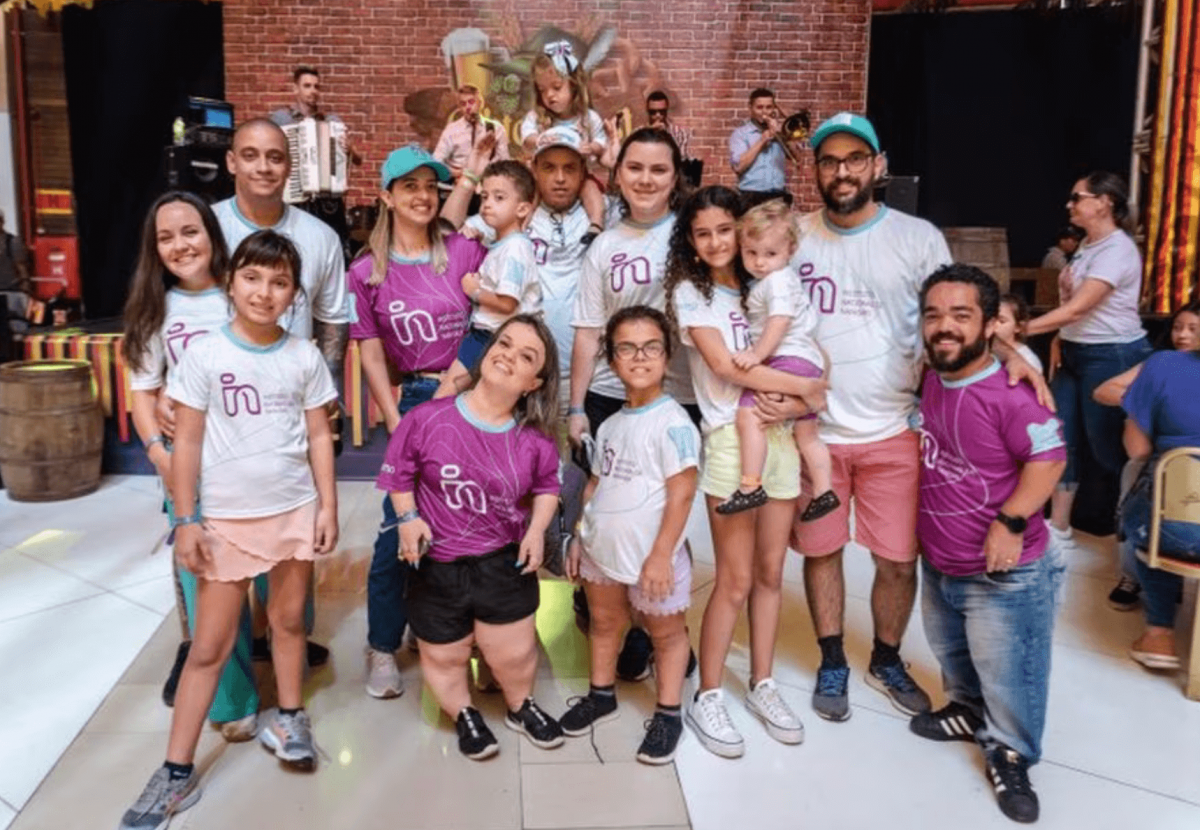
Through the Somos Todos Gigantes movement, which has accumulated more than 16,000 followers on Instagram, various families seek out others with similar cases of dwarfism on a daily basis, but it is not always possible to locate them just in WhatsApp groups. There is even a lack of medical knowledge in the primary healthcare services of municipalities regarding the different types of dysplasias, which result in distinct comorbidities.
“We need to know where these people are, how many there are, and who has a diagnosis through a genetic test, or who only has a medical report with diagnoses that are often not even confirmed. All of this is important so that we know who we are working for and what the priorities of this community are. To this day, we do not have an official census in Brazil. We do not have the ambition to manage to conduct this census of all people in the country, but we need to know, especially, who the people are who are already linked to us through social media, WhatsApp groups, and other people that they know, she adds.
Formal registration
Institute's Social Work Consultant, Kézia Castro explains that filling out this questionnaire is a path to the user's formal registration and that the data can help secure rights as well as the fight for public policies while the assessment and registration provided for in the Brazilian Law for the Inclusion of Persons with Disabilities (LBI) are not effectively implemented by municipal, state, and federal governments. To register, access here
Service:
Reatech 2023 – International Fair of Technologies for Rehabilitation, Inclusion and Accessibility
October 4 to 7
Hours: from 1 PM to 8 PM on the 4th, 5th, and 6th; from 10 AM to 7 PM on the 7th
Location: São Paulo Expo
Address: Rodovia dos Imigrantes, 1.5 km – Vila Água Funda, São Paulo – SP
More information in this link.
Sources:
Jornal Fluminense
Gazette of the week
PCD Diary
Dawn Newspaper