With 10.5 million patient visits over the past 10 years—80% of which were through the SUS—AACD has established itself as a leading orthopedic center in Brazil
The history of AACD is filled with many inspiring examples for the healthcare sector. After all, it spans seven decades of impacting the lives of many patients. In the last 10 years alone, approximately 10.5 million procedures and treatments were performed at the Institution's facilities located in various parts of Brazil.
Since its founding in 1950, when Brazil was experiencing a polio outbreak, AACD has evolved to become a benchmark orthopedic center, and today it features an infrastructure that provides complete and excellent care in orthopedics and rehabilitation for patients with physical disabilities and orthopedic needs–The Institution consists of an orthopedic hospital, nine rehabilitation units, and five workshops for the manufacture of orthopedic products.
From the beginning, our focus has been patient-centered, with a concern for humanization, quality, and transparency in care. Few companies and institutions reach 70 years and still engage in philanthropy, like AACD, explains CEO Valdesir Galvan.
What stands out in AACD's history is the evolution of clinical protocols, which today allow the Institution to treat a variety of conditions. “When the patient enters AACD, they rely on a complete evaluation by a multidisciplinary team that defines their entire prognosis and treatment goals,” explains Galvan.
Patient-centered care
People without physical disabilities, but with the most diverse orthopedic needs, can also be treated at the AACD Orthopedic Hospital in São Paulo. There are 125 beds (111 for inpatient care and 14 in the ICU), modern operating rooms, and a highly trained staff.
In addition, AACD has five orthopedic workshops, where it produces orthoses, prostheses, braces, helmets, assistive mobility devices, wheelchair adaptations, insoles, and orthopedic shoes.
“Combined with production from its five factories in Brazil, the volume of products delivered in 2019 exceeded 61,000,” says Galvan.
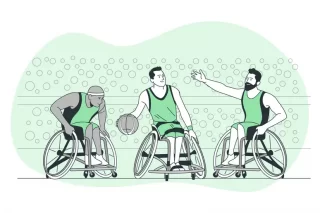
Another form of assistance provided by AACD is the inclusion of people with disabilities within society. Because of this, in addition to physical rehabilitation, AACD also develops various activities such as integration into Paralympic sports and the commitment to ensuring full social integration for patients.
“These actions promote improvements for the patient through daily overcoming and the guidance of a specialized multidisciplinary team.”
Toward Best Practices
According to Galvan, one of the pillars of the AACD's success is its governance model, which enables more effective management of internal and external processes.
The shift toward best practices not only made management more professional, but also served as a showcase for attracting resources to an organization whose roots lie in philanthropy and volunteerism.
“The AACD’s governance model follows practices established for a nonprofit association, which adopts mechanisms designed to ensure that its mission is fulfilled in an ethical and sustainable manner, such as the periodic renewal of its governing bodies,” Galvan points out.
Magnet of Solidarity
The AACD has provided 10.5 million consultations over the past decade, 80% of which were through the SUS—that is, at no direct cost to patients. The remaining 20% are patients treated through private insurance plans or on a private basis, which also help generate revenue for the institution.
To maintain this infrastructure and continue to help thousands of patients every year, the AACD relies on the support of the public. “The funding provided by the government for medical care does not cover all costs. That is why the organization needs individuals and companies to get involved in supporting people with physical disabilities,” explains Galvan.
To make all its projects a reality and provide excellent services, AACD relies on the dedication of approximately 2,000 employees and 1,100 volunteers. In addition, the organization holds events, runs fundraising campaigns, and partners with private-sector companies.
Among the campaigns with this goal is Teleton, which is dedicated to raising awareness and mobilizing Brazilian society around the cause of people with physical disabilities. The funds raised by Teleton make it possible for the AACD to provide approximately 200,000 services annually.
“We believe in the solidarity of the Brazilian people and are bringing several innovations to the donation process, which is now simpler, more practical, and faster,” emphasizes the CEO.
Certified Care
In 2018, the Institution received Qmentum International accreditation, which guides and monitors high-performance care standards and equates the AACD Orthopedic Hospital and Rehabilitation Center to the best hospital complexes in Brazil and the world as a benchmark in the healthcare field.
“Earning an international accreditation of Qmentum’s caliber has served to underscore our commitment to providing high-quality care,” says the CEO.
“Humanization is in the AACD’s DNA, because, in addition to being a nonprofit organization, we have always believed in providing personalized and welcoming care. This certification validates our work and demonstrates that we are aligned with the most modern practices in the healthcare market, always putting the patient first,” noted the institution’s CEO.Back in 2019, the AACD received Planetree international accreditation, which positions the institution as a leader in patient-centered, humanized care.
Modernization on the Agenda
Through investments in infrastructure and hospitality, the AACD has made significant strides focused on the quality, safety, and comfort of patients and its staff.
Over the past three years, renovations have been carried out in the orthopedic hospital’s inpatient ward, outpatient clinic, and operating room. At the Ibirapuera facility’s rehabilitation center, the entire layout of the spaces designated for therapy and reception has been redesigned.
In addition, the AACD has upgraded the medical technology at the hospital and rehabilitation center at the Ibirapuera campus, increasingly establishing itself as a leader in the field of orthopedics. “Today, we are prepared to treat everything from minor disabilities to highly complex cases,” notes the CEO.
Exponential growth
With the aim of improving the quality of patient care, the AACD is planning initiatives for the coming years in pursuit of a financially stable future.
“We plan to expand the hospital with a focus on enlarging the Surgical Center. The project calls for a 30% increase in space, including new operating rooms, ICU beds, and an expansion of the Central Sterile Supply Department (CME).”.
In addition, the Technical Cooperation project plans to establish new partnerships to bring the AACD model of care to other regions of the country.
“All of our expertise will be shared with civil society organizations in various parts of Brazil to assist with professional training and services for that population, without the need to build a new AACD facility.”
Galvan emphasizes the importance of looking at the person with a disability. “Our fight is for these people to be welcomed. To provide the assistance they need. This always is and will be our goal 70 years from now,” he concludes.
SOURCE:
HEALTHCARE