Thirteen years have passed since Cid Torquato Júnior, a native of Mogi das Cruzes, was invited by the United Nations (UN) to give a lecture in the region of Croatia during a family vacation trip through Europe. A lawyer graduated from the University of São Paulo, Cid boasts an enviable resume as an executive for StarMedia Networks and Lowe & Partners Latin America. He was an e-government advisor during the administration of former president Fernando Henrique Cardoso, as well as the founder of the Brazilian Electronic Commerce Chamber, an entity that brings together the country's leading industrial and commercial companies. After the lecture, during a moment of leisure, a poorly planned dive from a pier into the Adriatic Sea caused him a cervical fracture and tetraplegia, which he has lived with since September 2007, supported by a wheelchair. After working with the Government of the State of São Paulo during Geraldo Alckmin's administration to support people with physical disabilities, Cid Torquato, 57, is currently the municipal secretary for the Person with Disabilities for the City of São Paulo and shows, in an interview with The Diary, how are you dealing with the Covid-19 pandemic and how is your department acting in this difficult time for everyone. Here is the interview:
How are you coping with isolation and the pandemic?
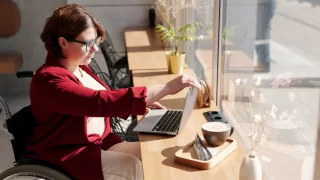
Very sad moment for humanity. We still do not know the extent of the damage this virus will inflict on the economy and social interaction. At the same time, many windows of opportunity and positive changes are opening up. We must be attentive to both of these aspects to mitigate the negative impact of this crisis. In this scenario, I am protecting myself, taking all preventive measures, but also working hard on behalf of the most needy people with disabilities in the city of São Paulo. Despite this whole pandemic, I have taken the opportunity to reconnect with many people I hadn't seen in a long time. I have been renewing contacts and new ideas for projects within the City Hall and outside have emerged. They say that crises also bring opportunities. I am trying to seek them out, both for myself and for people with disabilities in general. I have been publicly advocating, in lives in which I participate, that the growing virtualization of processes represents a major window of opportunity for professionals with disabilities, who can showcase their talents without leaving home and, consequently, avoid the prejudice still very much present in face-to-face interactions. In front of the computer, everyone is equal, minimizing the alienation and ignorance experienced by people with disabilities in social life. I know the ideal would be everyone together and mixed, on an equal footing. But we have not yet reached this ideal civilizational stage, and telework represents a tremendous opportunity during this period of major behavioral changes.
Right now, what are the biggest difficulties faced by people with disabilities and how to face them?
In the current scenario, the biggest challenge for people with disabilities is not getting infected. For the most part, they represent a risk group, with a high possibility of severe respiratory complications. We have news of many deaths of people with disabilities in inclusive residences, clinics, and shelter homes in Europe and the United States. Another point is, if infected, ensuring dignified care, since we have many reports of people with disabilities being passed over and not receiving more complex care or even access to ventilators, which is extremely serious. Overall, I have argued that it is time to reinforce the political movement of people with disabilities, because we will certainly face attacks on rights hard-won over recent decades. As we know, in these moments of economic losses, those who need it most are the ones who lose the most. We cannot let this happen.
Do you work? What is your routine?
Most of the employees of the Municipal Secretariat for the Person with a Disability, of which I am the secretary, are working from home and teleworking. A small team and I have been going to our headquarters every day, mainly to maintain dialogue with the other secretariats and with the courageous Mayor Bruno Covas, who is living at the City Hall.
What actions have the City Hall and SMPED been taking on behalf of people with disabilities in São Paulo?
The City Hall's cross-cutting social actions are concentrated in the Cidade Solidária program, which channels donations to the most vulnerable population. In parallel, we have created an Emergency Shelter Center for homeless people with disabilities, we are monitoring around 60 organizations and hundreds of needy families with relatives with disabilities, to whom we provide basic food baskets, hygiene kits, masks, and gloves. Another important action is the transmission of specific information for each type of disability, always with digital and communicational accessibility resources.
How do you see the future, the relaxation of isolation, and the prospects for the segment of people with disabilities?
I have been reading everything that appears about this catastrophe plaguing us, but I cannot make predictions. In fact, the threats to the health and rights of people with disabilities are potentially so severe that all our energy is focused on minimizing these risks and ensuring a minimum of dignity for those who need it most. We have reports of very high death rates among people with disabilities in Europe and the United States. We cannot let the same happen in São Paulo.
Would you draw a parallel between the measures taken in São Paulo and those advocated by the federal area of the government?
São Paulo has been an example in terms of crisis management, both in the Capital and the State, under the firm command of Governor João Doria. However, it is very difficult to promote isolation with so much misrule and criminal irresponsibility at the federal level. The negative impacts could have been much smaller, preserving many lives, if the national coordination were technical rather than political. A true shame, which will certainly be marked in our history.
What precautions have you been taking regarding your mother and other family members who stayed in Mogi?
My mother, Mrs. Neyde Torquato, who is over 80 years old, is in total isolation with my sister Renata. They have been locked away for months with no contact with anyone, except through video conferencing. My sisters, brothers-in-law, and nephews/nieces are also taking care of themselves, isolated, quickly learning about telework and distance learning.
Have you been following Mogi's work during the pandemic? What have you thought of it?
I always talk with my great friend Juliano Abe, vice-mayor of Mogi. I understand that the possible measures were taken, even with the lack of resources and support from the Federal Government. A good portion of the municipalities, broke, do not have the budget available to face this health catastrophe. I consider Mogi a very positive example of work.
We are going to have municipal elections this year. When will you run for mayor or city councilman of Mogi?
I would really like to contribute to public management in Mogi das Cruzes. It would be very interesting to be able to apply everything I learned in the State and City Hall of São Paulo in the city where I was born and still have family and great friends. Who knows, maybe the next mayor, elected or re-elected, will invite me to take charge of a municipal secretariat!
What will have to change in all of our lives at the end of the pandemic (if it ever comes to an end...). What has the pandemic already changed, and what is here to stay when it's over?
We are all rooting and hoping for a vaccine or cure against this damned virus. If they come, we will return to normal life. Otherwise, we will always have to be super protected, with strict hygiene and disinfection protocols. It will be the end of events, parties, concerts, theater, cinema, bars, and restaurants, among others, as we know them today. In either of these scenarios, starting right now, we will feel the impact of digital transformation, which has accelerated technological processes in all sectors of society, with video calls, video conferences, and lives the most visible tip of this iceberg of change.
SOURCE:
THE DIARY